The story of Longevergne
The history of Longevergne Castle
The origins
The first traces of Longevergne Castle date back to the year 1228. A certain Aubert de Longevergne occupied the premises. Another succeeded him.
A welcoming land and annex of the Ydes commandery
It is said that Longevergne served as an inn for many years. According to the archives of the Templar commandery of Ydes, later taken over by the Order of Saint John of Jerusalem, Ydes had two annexes: the castle of Longevergne and the hospital. Travelers leaving the Ydes commandery and heading towards the Pas de Peyrol, finding themselves a day’s walk from Longevergne, would come there seeking refuge.
From Hugues de Bort to the Montclar
At the beginning of the 15th, the castle became the property of Hugues de Bort, originally from the castle of Pierrefitte. He was captain of the castle of Claviers, an imposing fortress which then dominated the valley of the Mars at Jaillac on the current site of the statue of the Virgin.
Later, the castle became the property of Georges de Bort. His daughter, Lucques de Bort, inherited it. She lived there for many years. Numerous records of her presence can be found in the castle’s documents, and she is believed to have been instrumental in the construction of the monument as we know it today. Lucques de Bort, in turn, had a daughter named Jeanne, who married Guinot de Montclar at the beginning of the 16th century .
In the 17th, following a marriage, the heirs of the Montclar family went to live in the Château de la Trémolière located in the town of Anglards-de-Salers.
The end of the 18th marks the end of the Montclar reign in the castle.
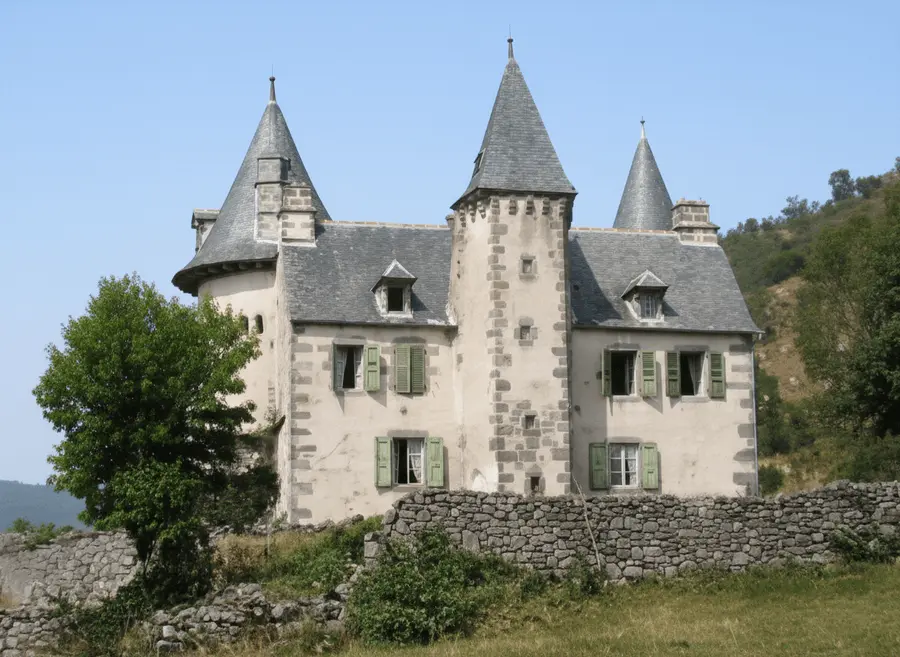
Longevergne before 1900, rear facade. Photo enhanced by AI
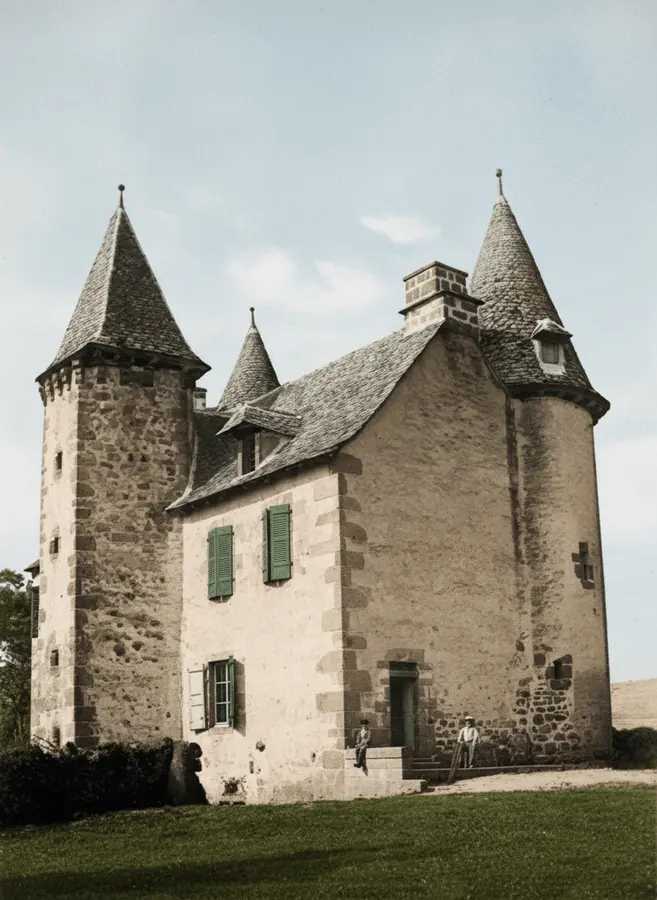
Longevergne before 1900, north facade. Photo enhanced by AI
Abbot Lavergne and his descendants
The Château de Longevergne fell into ruin and was sold to Antoine Lavergne, the parish priest of Maintenon. A colorful, authoritarian, and fascinating character, he took over the building and completely restored it. He had fled the revolutionaries, as he expressed in his will: ” A tombstone six and a half feet long and three and a half feet wide shall be placed on my grave, and on this stone shall be engraved: Here lies Antoine Lavergne, former parish priest of Maintenon, near Chartres in Beauce, who emigrated in 1791 for 26 years to escape the cannibals of the revolution who were flooding Paris and its surroundings with blood. “
Upon his death in 1850, his nephew Michel Diernat inherited the Château de Longevergne. He also had the church of Maleprade, the parish of Longevergne, built in order to scrupulously respect his testamentary wishes.
The significant transformation of the castle
In 1905, Michel Dienart’s only daughter married a certain Alexandre Lagoutte who then undertook a major restoration of the castle.
In the “Violet-Le-Duc” style, Longevergne was raised by half a story, the slate roof replaced the lauzes, and the North tower was entirely rebuilt to match the South tower. The latter regained its parapet walk and machicolations.
As for the staircase in the hexagonal tower, it was completely rebuilt using Volvic stone.
Until recent years, the castle remained the exclusive property of the descendants of Abbot Lavergne, to whom we most certainly owe its majestic aura and all its strength of character.
Sources: the statistical dictionary of the department of Cantal by Jean-Baptiste de Ribier du Châtelet… and above all, another more human and precious source: the memory of one of its former (and no less recent) owners, who now occupies one of the original annexes a few steps from the castle.
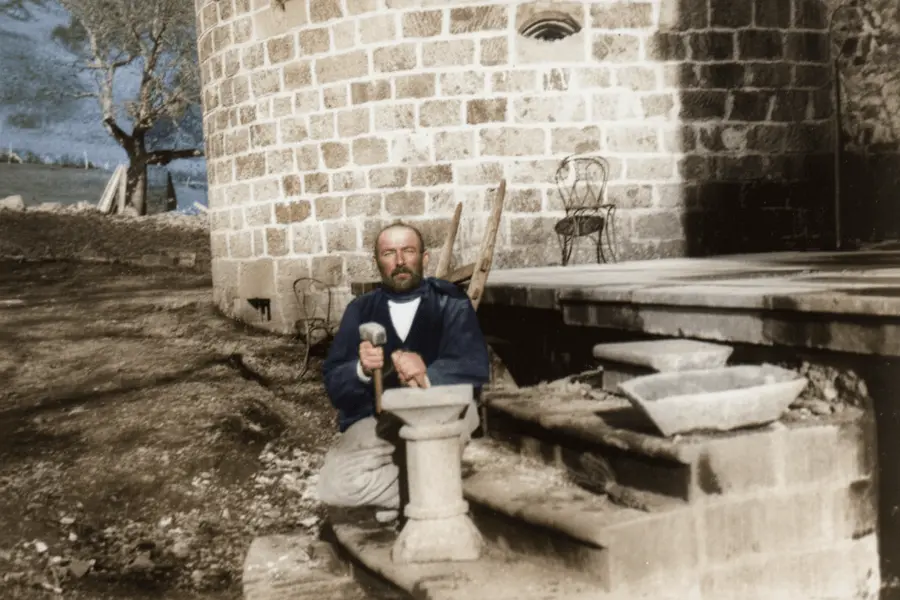
Longevergne before 1900, stonemason, front facade. Photo enhanced by AI